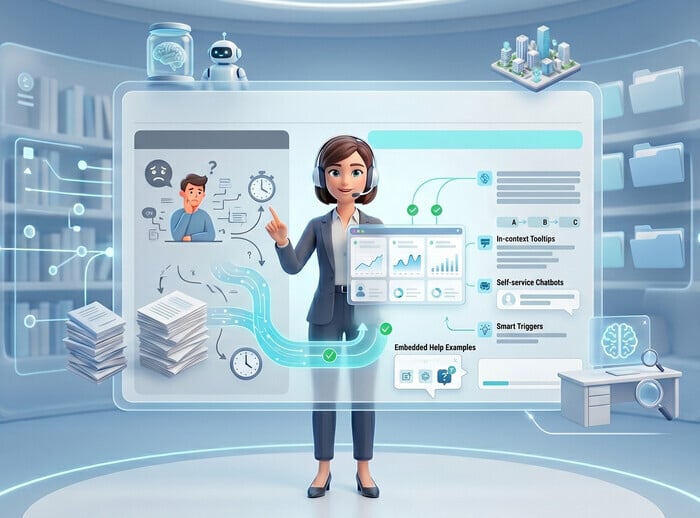
Imagine a DevOps engineer at a fast-growing fintech firm starting their Monday: they sift through outdated Confluence wikis for the latest Kubernetes configs, dig up static PDFs buried in email threads and Slack channels, and comb through Zendesk tickets just to answer a routine BigQuery question. Hours are lost weekly to this documentation chaos that stalls sprints and breeds errors.
Google Cloud’s move to consolidate technical documentation under docs.cloud.google.com marks a major step in centralizing developer resources. By bringing guides, API references, and code examples into a single, well-structured portal with improved search and navigation, Google illustrates a key 2026 trend: transforming fragmented, human-focused documentation into AI-ready, structured knowledge systems. While big tech vendors lead the way, industries from cloud computing to fintech are exploring whether unified, semantically rich documentation portals will become standard or remain an innovation for the elite.
In this article, we explore the key trends shaping documentation in 2026: from AI-ready knowledge bases and semantic search to unified portals and structured knowledge management, using Google Cloud’s example and its implications for DevOps, fintech, SaaS, and beyond.
Google Cloud’s Pioneering Portal
Google Cloud’s docs consolidates the entire documentation ecosystem into a single portal, covering guides, API references, and code examples. It features fast load times, clear navigation, and enhanced search to help developers quickly locate what they need.
The homepage is organized into key sections, including Generative AI, Data Analytics, Databases, Security, Networking, Observability, Storage, and Industry Solutions for retail, healthcare, and finance. Resources are grouped by workflow stages, guiding users from learning core concepts to applying them in production.
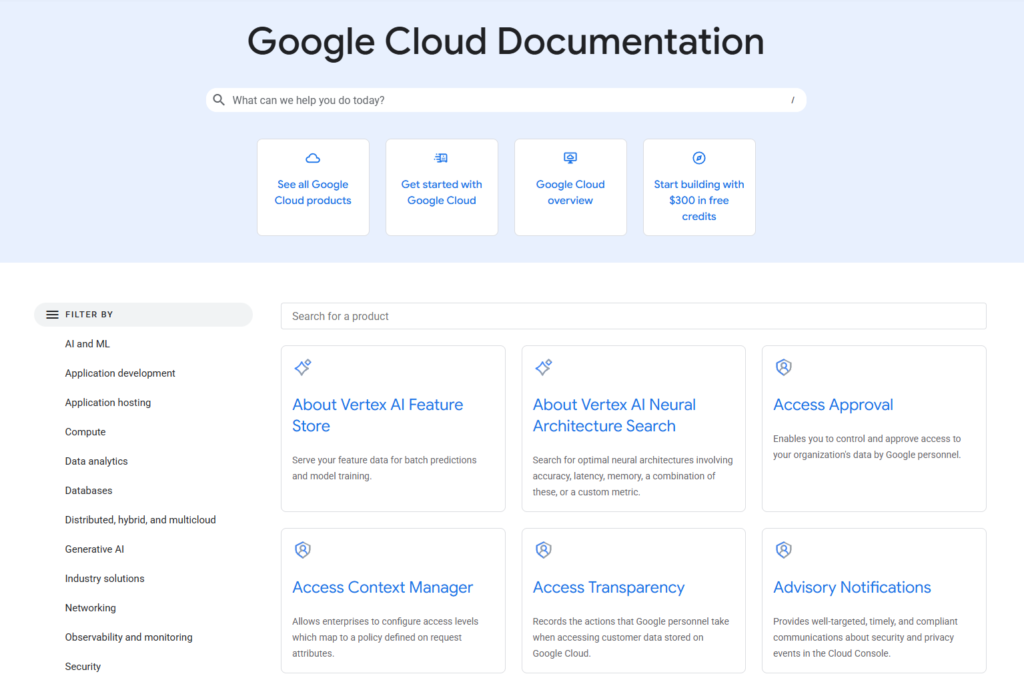
AI-enhanced features include context-aware search, interactive code snippets, and multilingual support. The portal can integrate with tools like Gemini AI, enabling code assistance and context-aware content generation. This helps teams experiment with code, analyze workflows, and develop AI-assisted tools alongside structured documentation.
Calls-to-action guide users through generative AI workflows, hybrid multicloud tasks, and observability tools, reducing time spent searching for content and accelerating onboarding. The portal’s design also supports future AI-assisted workflows, including potential IDE integrations for live examples. This approach influences documentation strategies across other cloud vendors.
AI-First Knowledge Bases
AI-first knowledge bases are becoming a key trend for SaaS platforms and enterprise IT. They enable near real-time synchronization of documentation across tools like Git repositories, Jira tickets, and Slack channels, ensuring that cloud-native applications always have up-to-date guidance.
Modern systems can route user queries intelligently to specialized AI agents. For instance, troubleshooting Kubernetes issues can be handled by one model, while Terraform configuration questions go to another. This multi-agent approach allows organizations to manage complex workflows more efficiently.
In regulated sectors such as cloud infrastructure and cybersecurity, AI-first knowledge bases prioritize security and compliance. Features like encrypted embeddings and adherence to standards such as SOC 2 and ISO 27001 help protect sensitive data. They also support domain-specific AI customization, producing more accurate, context-aware results for tasks like security audits, observability monitoring, or enterprise workflow optimization.
Semantic Search Over Keyword Matching
Semantic search is replacing traditional keyword-based tools with vector-based engines that understand the intent behind natural language queries. For example, developers can ask questions like “Deploy a serverless Lambda function with least-privilege IAM policies” or “Fix a Kubernetes pod crash loop” and receive results that are relevant to their context, including code snippets, diagrams, and instructional videos.
These engines, often powered by vector databases such as Pinecone or Weaviate, rank content across diverse types, improving precision and helping teams resolve complex issues faster. In API-intensive environments, semantic search can integrate with OpenAPI specifications to anticipate common errors and suggest fixes proactively.
Across industries, semantic search enables developers to troubleshoot independently, find configuration guidance, and reduce reliance on support teams. By understanding intent rather than just matching keywords, modern portals streamline workflows and improve developer productivity.
Unified Portals vs. Fragmented Systems
Documentation fragmentation is a common challenge for teams managing multiple services, repositories, and support channels. Disjointed wikis, static PDFs, and helpdesk tickets can slow onboarding and troubleshooting. Unified portals address this by consolidating resources into a single, searchable hub.
Key benefits of unified portals:
- Reduced navigation friction: Teams spend less time switching between apps when services span multiple repositories.
- Centralized search: AI-powered indexing covers all formats, including changelogs, API specifications, and support tickets.
- Near real-time updates: Documentation is synchronized across sources to stay current.
- Role-based access: Teams see content tailored to their role, such as CI/CD pipelines for engineers and troubleshooting flows for support staff.
This approach scales well for distributed teams. Unlike fragmented setups, unified portals maintain versioned cross-references and changelog feeds, which are critical for CI/CD pipelines. In industries with live-service operations, such as cloud platforms or gaming, unified portals help teams respond faster to operational issues and coordinate across multiple squads.
Documentation as a Product
In many SaaS companies, documentation can lag behind frequent feature releases. Teams often face outdated READMEs, scattered API specifications, and high support demand due to unclear guides. Treating documentation as a product helps address this by applying software development practices such as analytics, testing, and role-specific customization.
Key capabilities:
- A/B testing: Compare documentation variants to optimize readability and comprehension.
- Analytics integration: Track usage to identify sections where users drop off and prioritize updates.
- AI-assisted guidance: Provide auto-generated code examples or troubleshooting suggestions for developers.
- Interactive tutorials: Enable progress tracking and structured learning paths.
- Personalized content: Tailor guides to specific roles, such as frontend or backend developers.
By adopting a product mindset, teams can maintain up-to-date content, reduce support requests, and improve developer experience. Governance practices, including explainability and domain-specific models, allow documentation to be adapted for specialized needs, such as fintech compliance or gaming SDKs. This approach shifts documentation from being a passive reference into a structured, role-aware, and continuously improving resource.
From Document Management to Knowledge Orchestration
Teams using traditional document management systems, such as SharePoint, often spend significant time organizing files rather than using them. Engineers may search through versioned PDFs, untagged folders, and disconnected GitHub wikis while critical deployment knowledge resides in Jira comments or Slack threads.
Knowledge orchestration transforms these static repositories into coordinated, AI-assisted systems. Modern platforms can:
- Auto-classify content: Use AI to read document context and organize API specifications, deployment guides, and troubleshooting notes without manual tagging.
- Orchestrate workflows: Route new pull request documentation from GitHub to relevant Confluence pages or Slack channels.
- Identify content gaps: Analyze issue trackers to surface missing guides or documentation before they block releases.
As a result, teams spend less time searching for information, and relevant content is more easily accessible. Release managers can view consolidated changelogs, ticket resolutions, and discussion threads, reducing the need to manually gather knowledge from multiple sources. Automated tracking and audit trails also support compliance, helping organizations treat documentation as a maintained and reliable resource rather than administrative overhead.
Big Tech Leadership and Industry-Wide Adoption
Major cloud providers such as Google, Microsoft, and AWS are leading the development of unified documentation portals, integrating AI-assisted search, structured knowledge bases, and workflow tools. Mid-tier vendors in CRM and HR technology are adopting similar approaches using open-source frameworks like Docusaurus combined with AI plugins.
Challenges include AI hallucinations, which require hybrid human review, and multimodal content for AR/VR documentation in emerging platforms. Adoption of AI-first and agent-ready documentation is expected to grow across cloud and developer tools, supported by standards such as the Open Component Model (OCI) for interoperable knowledge.
Conclusion
In 2026, documentation will shift from scattered wikis to smart AI systems that speed up work and even bring in revenue. Google Cloud’s unified portals will lead the way, making it easy to ask natural questions and pull live answers into tools like GitHub Copilot.
DevOps teams won’t waste time hunting anymore. Instead, zero-shot AI, semantic search, and predictive tools will surface exactly what they need. Productized docs will add A/B testing for better readability, premium AI helpers, and fresh income streams.
Forward-thinking cloud, fintech, and gaming companies will turn documentation into a real competitive edge rather than just overhead.
Good luck with your technical writing!
Author, host and deliver documentation across platforms and devices
FAQ
What is AI-first documentation?
AI-first documentation is a knowledge portal designed to work with artificial intelligence. It consolidates guides, API references, and code examples in one hub, supports semantic search, and can integrate with AI tools, such as code assistants or LLMs, to help developers quickly find the information they need.
How does semantic search differ from keyword-based search?
Semantic search understands the intent behind a query rather than just matching keywords. For example, a query like “optimize BigQuery for ML workloads” can return relevant guides, code snippets, and diagrams even if the exact words do not appear in the documentation. This improves accuracy and speeds up problem-solving.
Why are unified portals better than fragmented wikis and PDFs?
Fragmented documentation creates “knowledge silos,” making it harder to find information and increasing the risk of errors. Unified portals consolidate all resources in one system, provide role-specific access, version control, change histories, and AI-assisted indexing, reducing search time and improving workflow efficiency.
What is knowledge orchestration?
Knowledge orchestration turns static documentation into coordinated, AI-assisted workflows. It can automatically classify content, route updates between tools (e.g., GitHub, Confluence, Slack), identify gaps in documentation, and make relevant information easily accessible to teams.
Who is leading the development of AI-first portals?
Leading cloud providers include Google Cloud, Microsoft (Azure AI documentation), and AWS. Mid-sized companies are adopting open-source frameworks like Docusaurus with AI plugins to build their own AI-enhanced documentation portals.
What will documentation look like after 2026?
Documentation will continue moving from fragmented wikis and static files to AI-assisted knowledge systems. Semantic search, predictive content generation, and a productized approach will allow teams to find information faster, reduce support load, and maintain up-to-date, role-specific content.