What Is a Developer Portal?
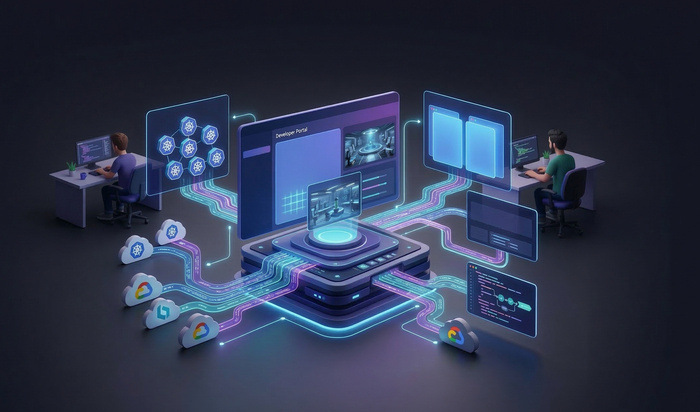
A developer portal is a centralized platform that gives engineering teams access to the tools, services, and workflows they need to build and operate software. Instead of navigating dozens of separate systems, developers can discover infrastructure resources, documentation, APIs, and deployment pipelines through a single interface.
Modern developer portals go far beyond internal wikis or documentation hubs. They function as internal developer platforms (IDPs) that unify engineering tools and automate common development workflows.
Popular solutions such as Backstage and OpsLevel illustrate how these platforms help organizations manage complex software ecosystems. Within a portal, developers can discover services, provision environments, and follow standardized development practices without leaving their primary workflow.
Many portals also integrate infrastructure and cloud tooling. For example, workflows often include orchestration with Kubernetes, infrastructure automation, and continuous delivery pipelines. The result is a unified engineering environment where teams can access everything required to develop, deploy, and maintain applications.
Documentation also plays an important role in this ecosystem. When organizations use specialized documentation platforms like ClickHelp, they can establish a professional developer portal that hosts structured technical documentation, API references, and onboarding guides in a single, searchable environment.
In short, a developer portal becomes the operational hub of modern software engineering.
Developer Portal Problems Solved
Engineering teams often struggle with fragmented tooling and scattered information. As organizations grow, developers may rely on dozens of internal platforms, repositories, dashboards, and infrastructure tools. Finding the right service, documentation, or workflow can become a time-consuming process.
Developer portals address these challenges by creating a unified access layer across the engineering ecosystem.
One of the most common problems is fragmented tooling. Developers frequently switch between CI/CD systems, cloud dashboards, monitoring tools, and code repositories. A portal consolidates these resources into a single interface so teams can access services and infrastructure without navigating multiple platforms.
Another challenge is inconsistent engineering practices. Without shared standards, teams may create different deployment processes, infrastructure configurations, or service documentation. Internal portals help enforce best practices through templates, automated workflows, and service scorecards that track compliance with organizational standards.
Information silos also slow down development. Documentation may be stored in separate systems, while ownership data and operational metrics live in different tools. A portal connects these resources, making services and knowledge easier to discover.
Developer portals also reduce shadow IT. When engineers lack convenient access to approved tools and workflows, they often build their own scripts and infrastructure processes. By providing standardized self-service workflows, a portal encourages teams to follow supported engineering patterns.
Finally, these platforms help reduce operational toil. Tasks such as environment provisioning, repository creation, and service onboarding can be automated through templates and workflows. As a result, developers spend less time on manual processes and more time building software.
Developer Portal Core Capabilities
While implementations vary across organizations, most developer portals share several core capabilities that support modern software development.
- Self-service infrastructure and workflows are one of the most important features. Developers can provision environments, create new services, or deploy applications without waiting for manual approvals. These workflows often integrate with infrastructure automation tools and cloud platforms.
- Service catalogs are another foundational component. A service catalog provides a centralized inventory of internal applications, microservices, APIs, and infrastructure components. Each service entry typically includes ownership information, documentation links, deployment pipelines, and operational metrics.
- Many portals also implement engineering scorecards. Scorecards help teams track operational standards such as reliability, security compliance, documentation completeness, and deployment practices. These metrics create transparency across the engineering organization and help platform teams enforce best practices.
- Extensibility is also essential. Many organizations customize their internal developer platforms using plugins and integrations. For example, Backstage supports an extensive plugin ecosystem that connects developer tools, infrastructure platforms, and internal services.
- Collaboration and visibility features allow teams to monitor the health of services, track deployments, and understand dependencies across the system architecture. Dashboards often display operational insights that help engineering teams manage production systems more effectively.
- Documentation integration is another critical capability. By leveraging ClickHelp as the central documentation hub, organizations provide engineers with instant access to API references, architecture guides, and troubleshooting resources. This ensures that high-quality, version-controlled documentation is always available as part of the broader developer ecosystem.
Together, these capabilities make developer portals a central coordination layer for engineering organizations.
Developer Portal Experience Focus
The success of a developer portal depends heavily on developer experience (DX). An effective portal reduces cognitive load by providing a consistent and intuitive interface across engineering tools and services.
Common experience design principles include role-based dashboards tailored to different teams, intelligent search across tools and documentation, and end-to-end workflows that guide developers from project creation to production deployment.
Platforms such as Backstage demonstrate this approach through plugin-based interfaces that unify multiple development tools. A developer-centric portal built with ClickHelp allows teams to access API documentation, troubleshooting guides, and architectural references through a unified and intuitive interface, significantly reducing cognitive load.
This developer-centric approach improves adoption, accelerates onboarding, and reinforces engineering standards across teams.
Internal Developer Portal Best Practices
Building a successful internal developer portal requires more than simply installing a platform. Organizations need to design the portal around developer workflows and long-term platform governance.
One best practice is to start with a clear platform ownership model. Many companies establish a dedicated platform engineering team responsible for maintaining the portal, defining engineering standards, and managing integrations with internal tools.
Another key principle is to focus on self-service automation. The most valuable portals automate repetitive tasks such as service creation, infrastructure provisioning, and deployment configuration. Templates and reusable workflows help developers launch new projects quickly while maintaining consistent standards.
Service ownership and visibility should also be prioritized. A well-maintained service catalog helps teams understand who owns each application, how services depend on each other, and where operational responsibilities lie.
Organizations should also prioritize documentation quality. Developer portals are far more effective when documentation is structured, searchable, and serves as a core part of the engineering ecosystem. Specialized platforms like ClickHelp help maintain version-controlled documentation that evolves alongside the software through automated publishing and API integrations.
Finally, organizations should continuously measure portal adoption and developer experience. Usage metrics, developer feedback, and platform analytics can reveal which workflows provide the most value and where improvements are needed.
Build vs. Buy Developer Portal
Organizations that want to implement an internal developer portal typically face a strategic decision: build a custom platform or adopt an existing solution.
Building a portal in-house offers the highest level of customization. Engineering teams can design workflows tailored to their infrastructure, development processes, and security requirements. Open-source frameworks such as Backstage provide a flexible foundation for building custom internal developer platforms.
However, building a platform requires significant engineering investment. Organizations must maintain the infrastructure, develop plugins, and manage platform upgrades. This approach is most suitable for companies with strong platform engineering teams and highly specialized requirements.
Buying a commercial solution offers a faster path to adoption. Managed platforms typically include built-in service catalogs, governance features, and integrations with common developer tools. Vendors also provide ongoing maintenance, support, and product updates.
For many organizations, a hybrid approach works best. Companies may adopt an existing developer portal platform while building custom plugins and workflows tailored to their internal systems. This allows teams to balance flexibility with faster implementation.
The right approach depends on engineering capacity, organizational scale, and long-term platform strategy.
Developer Portal Case Studies
Many large technology companies have implemented developer portals to manage complex engineering ecosystems.
Spotify
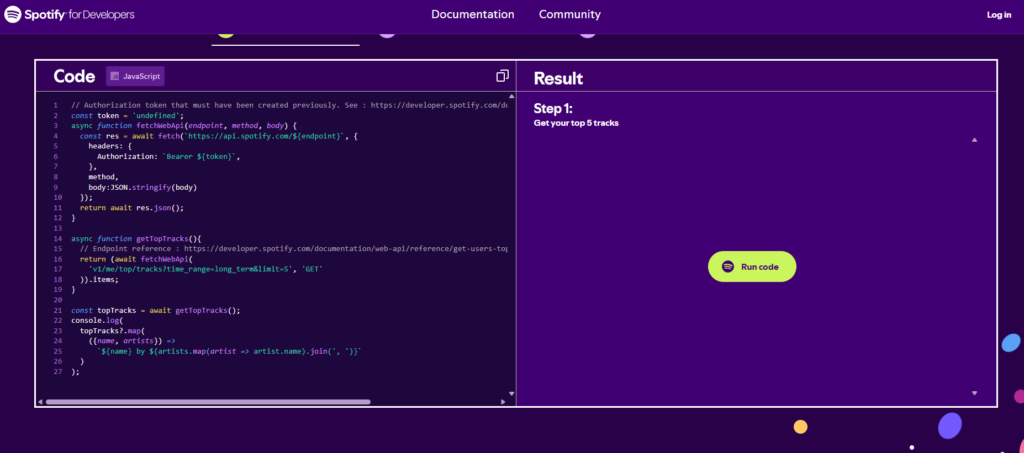
Spotify, the original creator of Backstage, built its platform to support thousands of developers working across hundreds of services. The portal provides scaffolding templates that automate repository creation, infrastructure configuration, and service onboarding. Custom plugins also provide scorecards that track service reliability and compliance with engineering standards.
Dynatrace
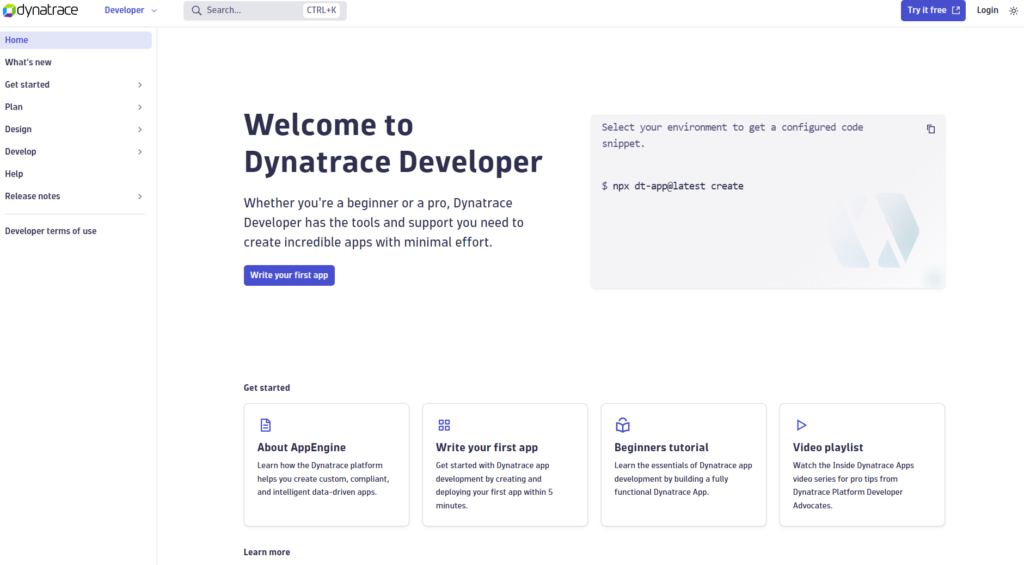
Dynatrace implemented a Backstage-based portal that integrates CI/CD pipelines, service ownership data, and observability tooling. Developers can monitor service health, view deployment pipelines, and access operational metrics through a single platform interface.
Celonis
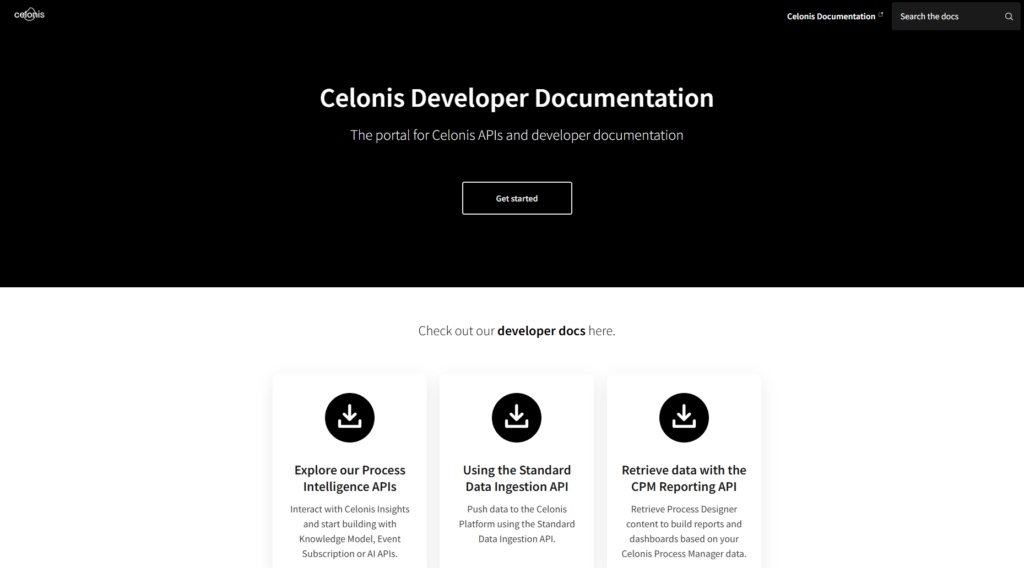
Celonis initially adopted open-source Backstage to centralize service catalogs and internal documentation. As the platform grew, the company transitioned to a managed portal solution in order to reduce maintenance overhead and focus on developer experience improvements.
Contentful
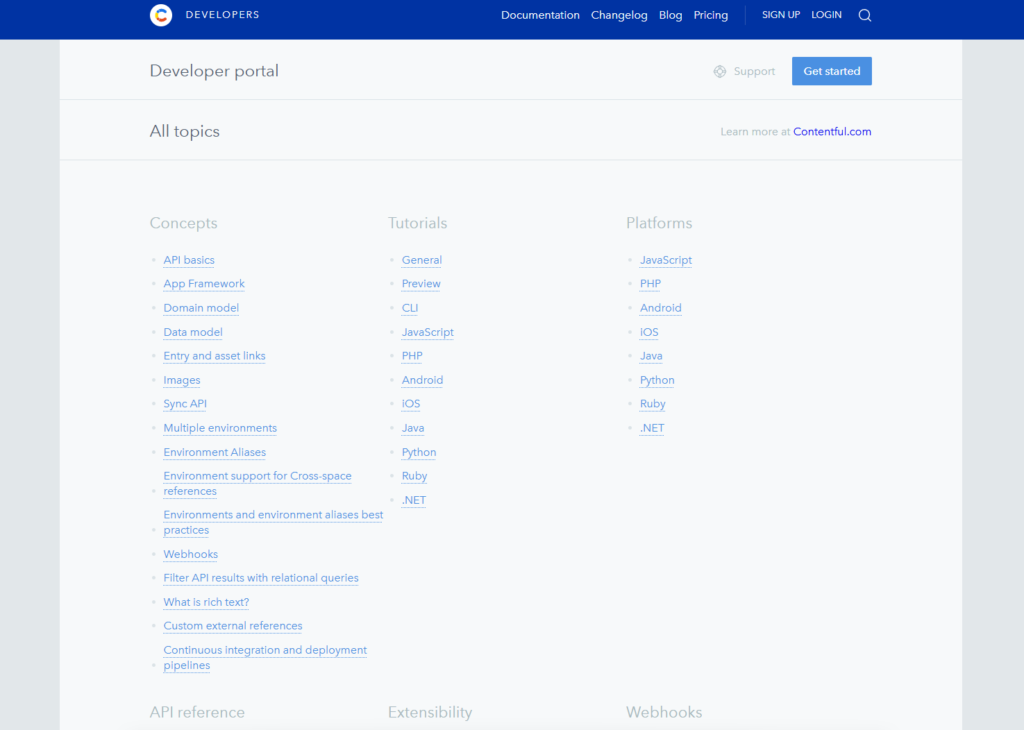
Contentful also adopted Backstage as its engineering platform as the company scaled its developer organization. The portal enabled teams to standardize service creation workflows, improve internal documentation, and increase code reuse across engineering teams.
Developer Portal Success Metrics
Measuring the success of a developer portal requires tracking both engineering efficiency and developer experience.
- Adoption metrics are one of the most important indicators. Organizations often measure the percentage of developers actively using the portal each week and how frequently core workflows are executed through the platform.
- Self-service efficiency is another key metric. Companies can measure how long it takes developers to create new services, provision environments, or deploy applications before and after portal implementation.
- Service reliability and operational health also provide important insights. Scorecards can track whether services meet engineering standards related to documentation, monitoring, security compliance, and deployment practices.
- Developer experience metrics may include internal surveys or developer Net Promoter Score (NPS). These measurements help organizations understand whether the portal actually improves engineering productivity.
- Finally, business outcomes such as deployment frequency, lead time for changes, and incident resolution time can demonstrate the broader impact of platform engineering initiatives.
Platforms such as OpsLevel provide native instrumentation for these KPIs, substantiating sustained investment justification.
Developer Portal Implementation Roadmap
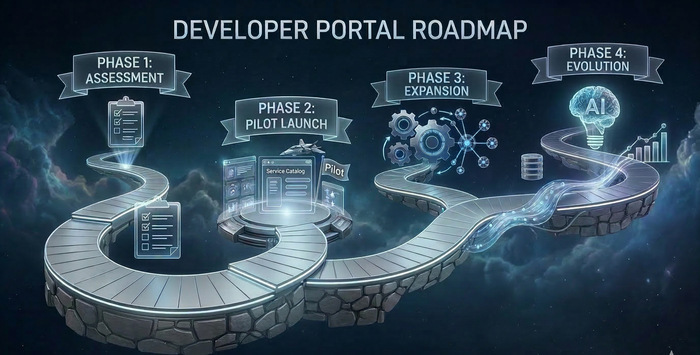
Implementing a developer portal is typically a phased process that evolves over time.
The first phase focuses on assessment and platform foundations. Organizations evaluate their existing developer tools, identify workflow bottlenecks, and define the objectives of the portal initiative.
The second phase involves launching a minimum viable portal for a pilot team. At this stage, the platform may include a service catalog, basic infrastructure workflows, and initial documentation integration.
Once the pilot proves successful, the platform can expand to additional teams and services. More advanced workflows, automation capabilities, and governance features are gradually introduced as the portal becomes part of everyday engineering operations.
The final phase focuses on long-term platform evolution. Organizations continuously refine workflows, expand integrations, and incorporate new technologies such as AI-assisted insights or advanced platform analytics.
Over time, the portal becomes a foundational layer of the organization’s engineering infrastructure.
Conclusion
Developer portals have become a core component of modern platform engineering. By unifying developer tools, infrastructure workflows, and documentation into a single interface, they help organizations improve developer experience and scale software development more effectively.
Platforms such as Backstage and OpsLevel demonstrate how internal developer portals can standardize engineering practices, enable self-service workflows, and provide visibility across complex software ecosystems.
When implemented thoughtfully — with strong governance, integrated documentation, and continuous measurement — developer portals can significantly improve engineering productivity and operational reliability.
As organizations continue adopting cloud-native architectures and microservices, internal developer platforms will play an increasingly important role in helping teams build, deploy, and operate software at scale.
Good luck with your technical writing!
Author, host and deliver documentation across platforms and devices
FAQ
What is a developer portal?
A developer portal is a centralized platform where developers can access tools, services, APIs, and documentation used in the software development lifecycle. It provides a single interface for discovering services, running workflows, and managing infrastructure.
Modern portals such as Backstage often function as internal developer platforms (IDPs) that unify engineering tools and automate development processes.
What is an internal developer portal?
An internal developer portal is designed for an organization’s internal engineering teams rather than external developers. It helps teams discover services, access infrastructure resources, and follow standardized development workflows.
Platforms like OpsLevel help organizations manage service ownership, governance, and engineering standards across teams.
Why do companies use developer portals?
Companies use developer portals to simplify complex development environments and improve developer experience. Instead of navigating many separate tools, developers can access services, documentation, and workflows in one place.
This reduces onboarding time, improves productivity, and encourages consistent development practices.
What are the main features of a developer portal?
Typical features include service catalogs, self-service workflows, infrastructure provisioning, and documentation integration. These capabilities help developers discover services and automate common tasks.
Many portals also integrate with platforms such as Kubernetes to support cloud-native applications and microservices.
Why are developer portals important for large engineering teams?
In large organizations with many microservices and tools, developer portals provide a central place to manage services and workflows. They improve visibility into service ownership, infrastructure resources, and development standards.
As organizations scale, internal developer portals become a core part of the engineering platform.